Description
Is Osimert 80 mg right for your situation?
Review these criteria with your oncologist before enquiring- ✓Confirmed EGFR-mutated NSCLC (exon 19 deletion or L858R) on molecular testing
- ✓EGFR T790M-positive disease after progression on an earlier EGFR inhibitor
- ✓Need a WHO-GMP generic alternative to Tagrisso® (AstraZeneca)
- ✓Hold a valid oncologist prescription
- ✗No confirmed EGFR mutation (biomarker testing is mandatory before starting)
- ✗Severe pre-existing interstitial lung disease
- ✗Pregnant, planning pregnancy, or breastfeeding
- ✗Significant uncontrolled cardiac arrhythmia or QTc prolongation
Check Availability & Pricing
Prescription required · Named Patient Program · Worldwide shipping
🛡 WHO-GMP Certified · Prescription verified · Express dispatch
What is Osimert 80 mg?
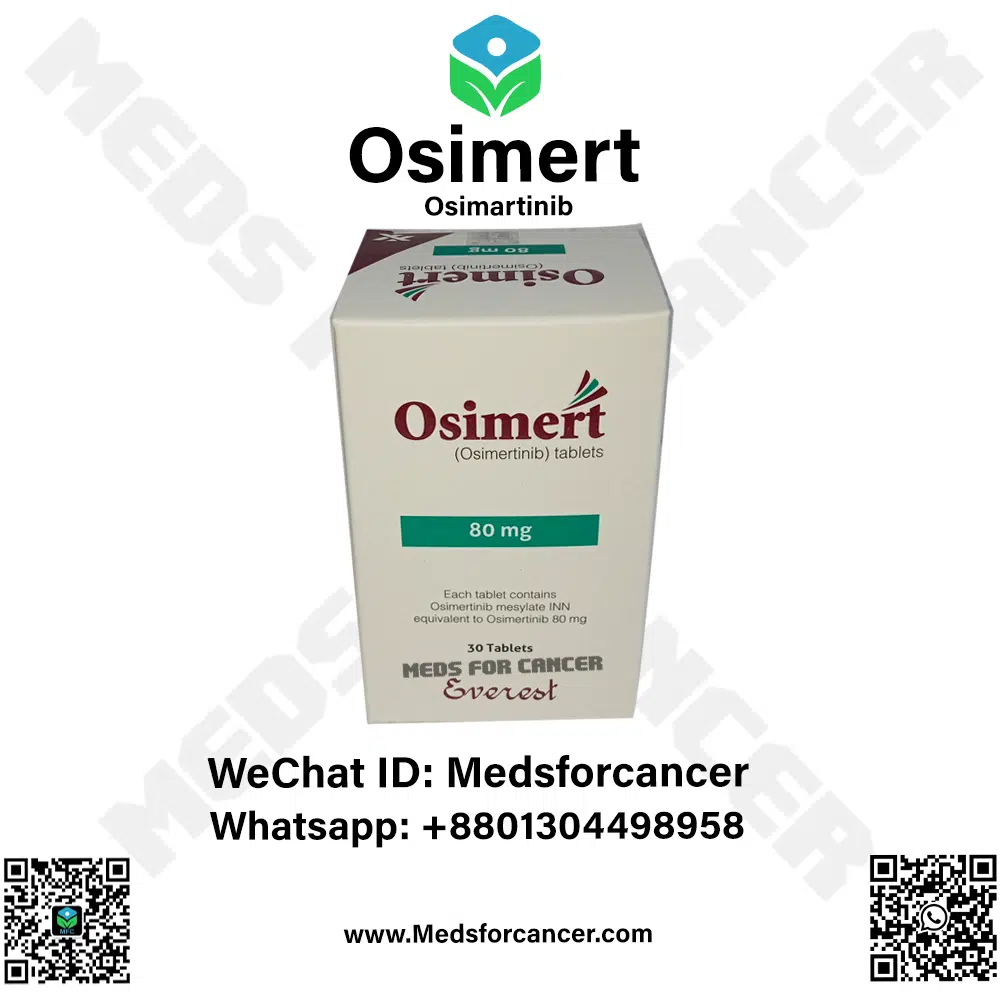
Osimert 80 mg is a generic formulation of Osimertinib — a third-generation, irreversible EGFR tyrosine kinase inhibitor (TKI) — manufactured by Everest Pharmaceuticals Ltd. under WHO-GMP certified conditions in Bangladesh. Each tablet contains 80 mg of osimertinib, the same active molecule found in Tagrisso® (AstraZeneca), and is dispensed under the Named Patient Program for patients requiring a quality-assured, affordable alternative.
Osimertinib is uniquely effective both as a first-line treatment for EGFR-mutated NSCLC and as a second-line treatment after resistance to earlier-generation EGFR inhibitors via the T790M mutation. It also has the strongest CNS penetration of any approved EGFR inhibitor.
| Generic name | Osimertinib |
| Reference brand | Tagrisso® (AstraZeneca) |
| Manufacturer | Everest Pharmaceuticals Ltd. |
| Standard | WHO-GMP Certified |
| Drug class | EGFR Inhibitor (3rd generation, irreversible) |
| Dosage form | Tablet — 80 mg |
| Pack size | 30 tablets per pack |
| Route | Oral · once daily |
| Prescription | Required — oncologist only |
How Osimertinib Works
In EGFR-mutated NSCLC, mutations such as exon 19 deletions or L858R cause the EGFR receptor to become permanently switched on, driving uncontrolled tumour growth. Osimertinib selectively and irreversibly binds to mutant EGFR, including the T790M resistance mutation that commonly emerges after treatment with first- or second-generation EGFR inhibitors.
What to Expect: First 30 Days
Osimertinib is generally one of the better-tolerated targeted therapies, with a milder side-effect profile than earlier EGFR inhibitors. Most patients adjust well within the first month.
- Week 1: Many patients feel relatively normal initially, though mild fatigue is common as your body adjusts to the new daily dose.
- Weeks 2–3: Skin changes — dry skin or a mild acne-like rash — commonly emerge during this window, along with a possible mild decrease in appetite. These are usually manageable with supportive skin care.
- Week 4: Your body has generally adjusted to the routine by now. Your oncologist will typically schedule a check-in to review side effects and discuss early imaging to assess response.
Side Effects
Osimertinib is generally well-tolerated, with most side effects mild and manageable. Always report new or worsening symptoms to your oncologist promptly.
Common · Usually Manageable
- Dry skin or acne-like rash
- Diarrhoea
- Nail changes (brittle or inflamed)
- Mouth sores
- Fatigue
- Decreased appetite
- Low blood cell counts
Serious · Report Immediately
- Interstitial lung disease / pneumonitis
- QTc prolongation (heart rhythm changes)
- Cardiomyopathy / heart failure
- Keratitis (eye inflammation)
- Severe skin reactions
- New or worsening breathlessness, cough, or fever (possible pneumonitis)
- Severe, watery diarrhoea that doesn’t stop
- Eye pain, redness, or vision changes
How to Take Osimert 80 mg
Standard dose: 1 tablet (80 mg) once daily, with or without food.
- 1Once daily at the same time — consistency improves steady-state drug levels.
- 2Swallow tablet whole with a glass of water. Do not chew or crush.
- 3If swallowing is difficult: drop the tablet into a small glass of plain (non-carbonated) water — do not crush or chew it — stir until it disperses, then drink immediately. Rinse the glass with a little more water and drink that too, to ensure the full dose is taken.
- 4Never stop without your oncologist’s instruction — discontinuing without guidance risks rapid disease progression.
- 5Storage: below 30°C, protected from moisture and light, out of reach of children.
Caregiver Guidance
- ♥Track side effects in a simple journal — especially skin rashes and diarrhoea — so you can report them accurately at appointments.
- ♥Monitor breathing closely — pay attention to any new shortness of breath or persistent cough and contact the oncologist if you notice changes.
- ♥Support daily adherence — set a phone alarm or use a pill organiser to make sure a dose is never missed.
If the Medicine Stops Working
Frequently Asked Questions
Do I need any tests before starting Osimert?
Can Osimert treat brain metastases?
How long do I need to take Osimert?
Can I stop if my scans look clear and I feel well?
Is hair loss common with Osimert?
Can I take Osimert with my other medications?
Meds For Cancer operates as a Named Patient Program (NPP) facilitator. Under this framework, WHO-GMP certified medicines are made available to individual patients with a confirmed medical need and a valid oncologist prescription, in countries where the branded product is unavailable or unaffordable.
This service does not constitute retail pharmacy dispensing. A prescription review is mandatory before any order is processed.
- Soria JC, et al. Osimertinib in untreated EGFR-mutated advanced NSCLC (FLAURA). NEJM 2018;378:113–125.
- Mok TS, et al. Osimertinib or platinum–pemetrexed in EGFR T790M-positive lung cancer (AURA3). NEJM 2017;376:629–640.
- NCCN Clinical Practice Guidelines in Oncology: NSCLC. V5.2026.
- Ramalingam SS, et al. Overall survival with osimertinib in untreated EGFR-mutated advanced NSCLC. NEJM 2020;382:41–50.