

Description
Is Selcaxen 40 mg right for your situation?
Review these criteria with your oncologist before enquiring- ✓Confirmed RET fusion-positive NSCLC, RET-mutant medullary thyroid cancer, or RET fusion-positive thyroid cancer
- ✓Molecular/genomic testing confirms a RET alteration in your tumour
- ✓Need a WHO-GMP generic alternative to Retevmo® (Eli Lilly)
- ✓Hold a valid oncologist prescription
- ✗RET testing is negative or not yet performed — biomarker confirmation is mandatory
- ✗Severe pre-existing liver disease or hepatotoxicity
- ✗Pregnant, planning pregnancy, or breastfeeding
- ✗On PPIs or strong acid-reducing agents (significantly reduces drug absorption)
Check Availability & Pricing
Prescription required · Named Patient Program · Worldwide shipping
🛡 WHO-GMP Certified · Prescription verified · Express dispatch
What is Selcaxen 40 mg?
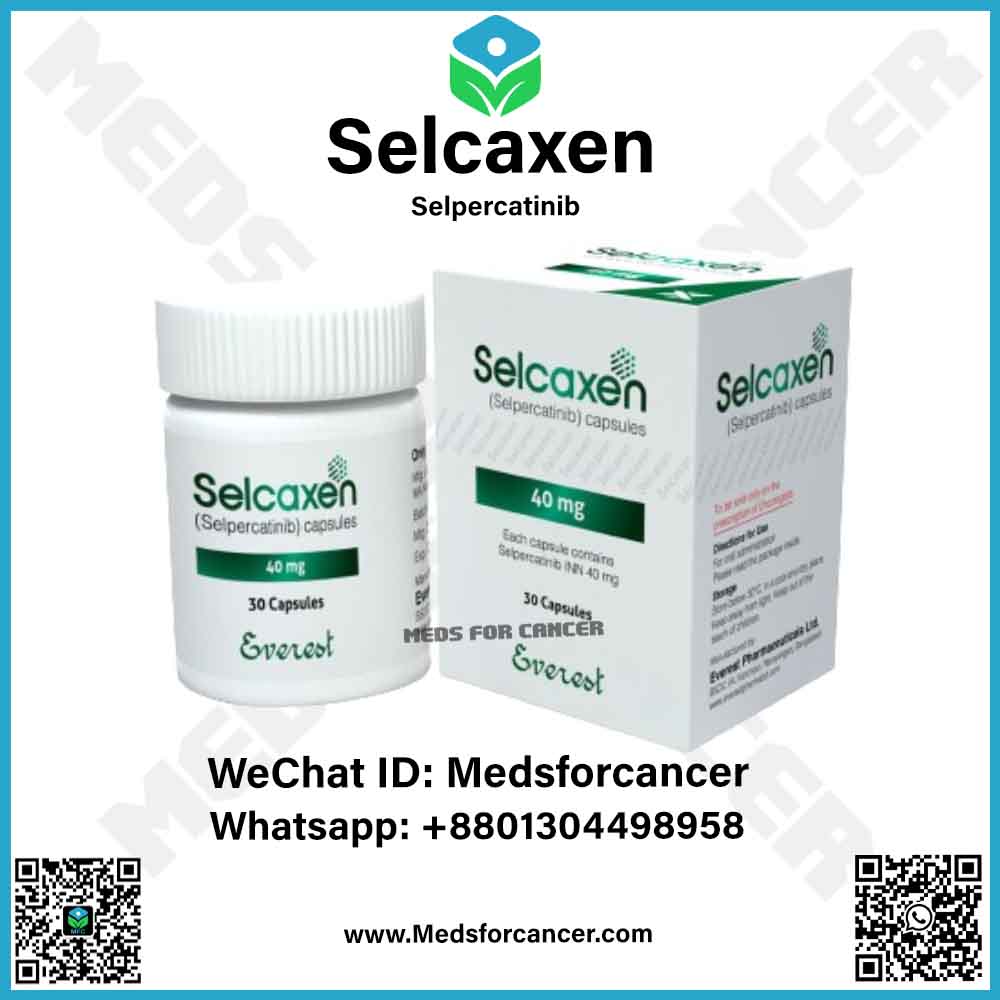
Selcaxen 40 mg is a generic formulation of Selpercatinib — a highly selective, first-in-class RET kinase inhibitor — manufactured by Everest Pharmaceuticals Ltd. under WHO-GMP certified conditions in Bangladesh. Each capsule contains 40 mg of selpercatinib, the same active molecule found in Retevmo® (Eli Lilly), and is dispensed under the Named Patient Program for patients with RET-altered cancers who require an affordable alternative.
Unlike older multi-kinase inhibitors, selpercatinib is a highly selective RET inhibitor — designed to maximise anti-tumour activity against RET alterations while minimising off-target toxicity.
| Generic name | Selpercatinib |
| Reference brand | Retevmo® (Eli Lilly) |
| Manufacturer | Everest Pharmaceuticals Ltd. |
| Standard | WHO-GMP Certified |
| Drug class | Selective RET kinase inhibitor |
| Dosage form | Hard capsule — 40 mg |
| Pack size | 30 capsules per pack |
| Route | Oral · twice daily |
| Prescription | Required — oncologist only |
How Selpercatinib Works
RET (Rearranged during Transfection) is a receptor tyrosine kinase that, when altered by gene fusion or point mutation, becomes constitutively active — continuously signalling tumour cells to grow, survive, and spread. RET alterations occur in approximately 1–2% of NSCLC and are the defining oncogenic driver in nearly all medullary thyroid cancers.
What to Expect: First 30 Days
Selpercatinib is generally well tolerated, with a milder side-effect profile than multi-kinase inhibitors. Most patients experience minimal disruption to daily life during the first month.
- Week 1–2: Dry mouth is the most common early complaint — stay well hydrated. Mild diarrhoea or constipation may occur. Blood pressure monitoring begins from day one.
- Weeks 2–3: Liver function tests are scheduled — selpercatinib can cause hepatotoxicity (usually asymptomatic but detected on blood tests). Attend all monitoring appointments.
- Week 4: RET-altered tumours typically respond rapidly — many patients see measurable tumour shrinkage within the first cycle. Thyroid cancer patients may notice improving tumour markers.
Side Effects
Selpercatinib is notably better tolerated than multi-kinase inhibitors used for RET-altered cancers. Most side effects are mild to moderate and manageable without dose reduction.
Common · Usually Manageable
- Dry mouth
- Diarrhoea or constipation
- Nausea and fatigue
- Elevated blood pressure
- Peripheral oedema (swollen ankles)
- Headache and dizziness
- Hair thinning (mild)
Serious · Report Immediately
- Hepatotoxicity (elevated liver enzymes)
- QTc interval prolongation (cardiac)
- Severe hypertension
- Haemorrhage (bleeding)
- Hypersensitivity / allergic reactions
- Yellowing of skin or eyes, dark urine, or severe fatigue (hepatotoxicity)
- Palpitations, chest pain, or syncope (possible QTc prolongation)
- Severe or unusual bleeding from any site
How to Take Selcaxen 40 mg
Dosing is weight-based: 120 mg twice daily if under 50 kg; 160 mg twice daily if 50 kg or more. Your oncologist confirms your exact dose.
- 1Twice daily, approximately 12 hours apart — e.g. with breakfast and dinner. Consistency of timing maintains stable drug levels.
- 2With or without food in most cases — but if you are also taking a PPI, take selpercatinib with food to compensate for reduced acid environment.
- 3Avoid PPIs, H2 blockers, and antacids where possible — these reduce selpercatinib absorption significantly. If unavoidable, your oncologist will advise on timing adjustments.
- 4Swallow capsules whole with a full glass of water. Do not open or crush capsules.
- 5Storage: below 25°C, protected from moisture and light, out of reach of children.
Caregiver Guidance
- ♥Monitor blood pressure twice daily — selpercatinib causes hypertension in approximately 35% of patients. Keep a log and share with the care team at every appointment.
- ♥Watch for liver symptoms — unusual fatigue, loss of appetite, upper abdominal discomfort, or yellowing of skin/eyes. These can precede detectable enzyme elevation on blood tests and should be reported immediately.
- ♥Manage the medication schedule carefully — the twice-daily dosing and acid-reducer interaction rules require careful planning. Set alarms for both doses and keep a medication diary.
If the Medicine Stops Working
Frequently Asked Questions
What types of cancer does Selcaxen treat?
How is Selcaxen different from older thyroid cancer medicines like cabozantinib?
Why can’t I take antacids or PPIs with Selcaxen?
Do I need genetic testing before starting Selcaxen?
Can Selcaxen treat brain metastases from lung cancer?
How do I order Selcaxen through Meds For Cancer?
Meds For Cancer operates as a Named Patient Program (NPP) facilitator. Under this framework, WHO-GMP certified medicines are made available to individual patients with a confirmed medical need and a valid oncologist prescription, in countries where the branded product is unavailable or unaffordable.
This service does not constitute retail pharmacy dispensing. A prescription review is mandatory before any order is processed.
- Drilon A, et al. Efficacy of selpercatinib in RET fusion-positive non-small-cell lung cancer (LIBRETTO-001). NEJM 2020;383:813–824.
- Wirth LJ, et al. Efficacy of selpercatinib in RET-altered thyroid cancers (LIBRETTO-001). NEJM 2020;383:825–835.
- NCCN Clinical Practice Guidelines in Oncology: NSCLC. V5.2026.
- NCCN Clinical Practice Guidelines in Oncology: Thyroid Carcinoma. V2.2026.





Reviews
There are no reviews yet.