
Description
Is Olanib 150 mg right for your situation?
Review these criteria with your oncologist before enquiring- ✓BRCA1/2-mutated ovarian, fallopian tube, or primary peritoneal cancer, including maintenance after platinum chemotherapy
- ✓Germline BRCA-mutated, HER2-negative metastatic breast cancer previously treated with chemotherapy
- ✓BRCA1/2 or ATM-mutated metastatic castration-resistant prostate cancer
- ✓Need a WHO-GMP generic alternative to Lynparza® (AstraZeneca)
- ✗No confirmed BRCA mutation or HRR gene alteration (genetic testing is mandatory before starting)
- ✗Pre-existing myelodysplastic syndrome (MDS) or acute myeloid leukaemia (AML)
- ✗Pregnant, planning pregnancy, or breastfeeding
- ✗Severe renal impairment without oncologist dose adjustment
Check Availability & Pricing
Prescription required · Named Patient Program · Worldwide shipping
🛡 WHO-GMP Certified · Prescription verified · Express dispatch
What is Olanib 150 mg?
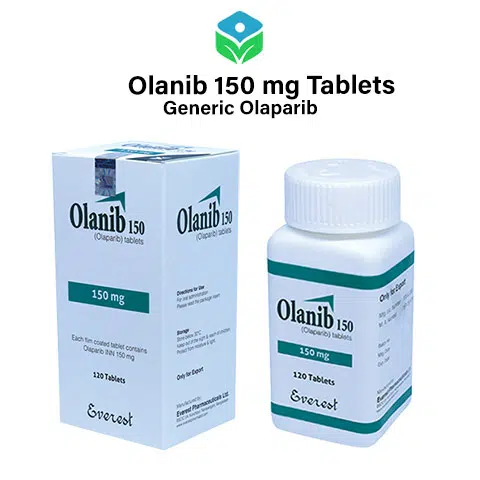
Olanib 150 mg is a generic formulation of Olaparib — a first-in-class PARP (Poly ADP-ribose Polymerase) inhibitor — manufactured by Everest Pharmaceuticals Ltd. under WHO-GMP certified conditions in Bangladesh. Each tablet contains 150 mg of olaparib, the same active molecule found in Lynparza® (AstraZeneca), and is dispensed under the Named Patient Program for patients with BRCA-mutated or HRR-deficient cancers requiring an affordable, quality-assured alternative.
Olaparib is approved across four cancer types — ovarian, breast, prostate, and pancreatic — each linked by a shared genetic vulnerability: deficiency in the homologous recombination repair (HRR) pathway, most commonly caused by BRCA1 or BRCA2 mutations.
| Generic name | Olaparib |
| Reference brand | Lynparza® (AstraZeneca) |
| Manufacturer | Everest Pharmaceuticals Ltd. |
| Standard | WHO-GMP Certified |
| Drug class | PARP Inhibitor |
| Dosage form | Film-coated tablet — 150 mg |
| Pack size | 120 tablets per pack (30-day supply) |
| Route | Oral · twice daily |
| Prescription | Required — oncologist only |
How Olaparib Works
Healthy cells have multiple backup pathways to repair damaged DNA. Cancer cells with BRCA1 or BRCA2 mutations have already lost one major repair pathway (homologous recombination repair) and depend heavily on a backup enzyme called PARP to survive. Olaparib blocks PARP, leaving these cancer cells with no functioning way to repair their DNA — a strategy known as synthetic lethality.
What to Expect: First 30 Days
Olaparib is generally well tolerated for a maintenance therapy, though gastrointestinal symptoms and blood count changes are common in the early weeks.
- Week 1: Nausea is the most common early symptom — taking the medication at bedtime can help. Mild fatigue is also common as your body adjusts to twice-daily dosing.
- Weeks 2–3: Blood counts begin to be monitored closely — particularly red blood cells, white blood cells, and platelets. A drop in haemoglobin (anaemia) is common and your oncologist may adjust monitoring frequency accordingly.
- Week 4: Most patients have adjusted to the routine. Your oncologist will review blood counts and overall tolerability and may discuss long-term monitoring plans, since olaparib is often a long-duration maintenance therapy.
Side Effects
Most side effects are manageable, but olaparib carries rare but serious risks that require ongoing monitoring throughout treatment.
Common · Usually Manageable
- Nausea and vomiting
- Fatigue
- Anaemia (low red blood cell count)
- Decreased appetite
- Diarrhoea
- Headache
- Altered taste
Serious · Report Immediately
- Myelodysplastic syndrome (MDS) / acute myeloid leukaemia (AML)
- Pneumonitis (lung inflammation)
- Severe or persistent low blood counts
- Venous thromboembolism (blood clots)
- New or worsening breathlessness, dry cough, or fever (possible pneumonitis)
- Unusual bruising, prolonged bleeding, or signs of infection (possible blood disorder)
- Sudden leg swelling/pain, chest pain, or breathlessness (possible blood clot)
How to Take Olanib 150 mg
Standard dose: 300 mg (two 150 mg tablets) twice daily, for a total of 600 mg per day, with or without food.
- 1Two tablets, twice daily — approximately 12 hours apart, e.g. morning and evening.
- 2Swallow tablets whole with a glass of water. Do not chew, crush, or dissolve them.
- 3Avoid grapefruit and Seville oranges (including marmalade) — these significantly increase olaparib blood levels via CYP3A4 interaction, potentially to dangerous levels.
- 4If you miss a dose, take your next dose at the scheduled time. Do not take an extra dose to make up for a missed one.
- 5Storage: below 30°C, in the original container, protected from moisture and light.
Caregiver Guidance
- ♥Track blood test appointments closely — regular Complete Blood Count (CBC) monitoring is essential, especially in the first year, to catch low blood counts early.
- ♥Watch for fever or unusual bruising — report any signs of infection, unexplained bruising, or prolonged bleeding to the oncologist promptly.
- ♥Help manage twice-daily dosing — set alarms 12 hours apart and remove grapefruit products from the household to avoid accidental interaction.
If the Medicine Stops Working
Frequently Asked Questions
Do I need genetic testing before starting Olanib?
What is the recommended dosage for Olanib 150 mg?
Can I take Olanib with food?
Why must I avoid grapefruit while taking Olanib?
How long will I need to take Olanib?
How do I order Olanib through Meds For Cancer?
Meds For Cancer operates as a Named Patient Program (NPP) facilitator. Under this framework, WHO-GMP certified medicines are made available to individual patients with a confirmed medical need and a valid oncologist prescription, in countries where the branded product is unavailable or unaffordable.
This service does not constitute retail pharmacy dispensing. A prescription review is mandatory before any order is processed.
- Moore K, et al. Maintenance olaparib in patients with newly diagnosed advanced ovarian cancer (SOLO-1). NEJM 2018;379:2495–2505.
- Robson M, et al. Olaparib for metastatic breast cancer in patients with a germline BRCA mutation (OlympiAD). NEJM 2017;377:523–533.
- NCCN Clinical Practice Guidelines in Oncology: Ovarian Cancer. V3.2026.
- de Bono J, et al. Olaparib for metastatic castration-resistant prostate cancer (PROfound). NEJM 2020;382:2091–2102.





Reviews
There are no reviews yet.