Description
Is Alecnib 150 mg right for your situation?
Review these criteria with your oncologist before enquiring- ✓Confirmed ALK-positive NSCLC on molecular or genomic testing
- ✓Seeking first-line or post-crizotinib ALK inhibitor therapy
- ✓Need an affordable WHO-GMP generic alternative to Alecensa® (Roche)
- ✓Hold a valid oncologist prescription
- ✗Lung cancer is ALK-negative (biomarker testing is mandatory before starting)
- ✗Severe pre-existing liver disease or significant bradycardia
- ✗Pregnant, planning pregnancy, or breastfeeding
- ✗Severe renal impairment without oncologist assessment
Check Availability & Pricing
Prescription required · Named Patient Program · Worldwide shipping
🛡 WHO-GMP Certified · Prescription verified · Express dispatch
What is Alecnib 150 mg?
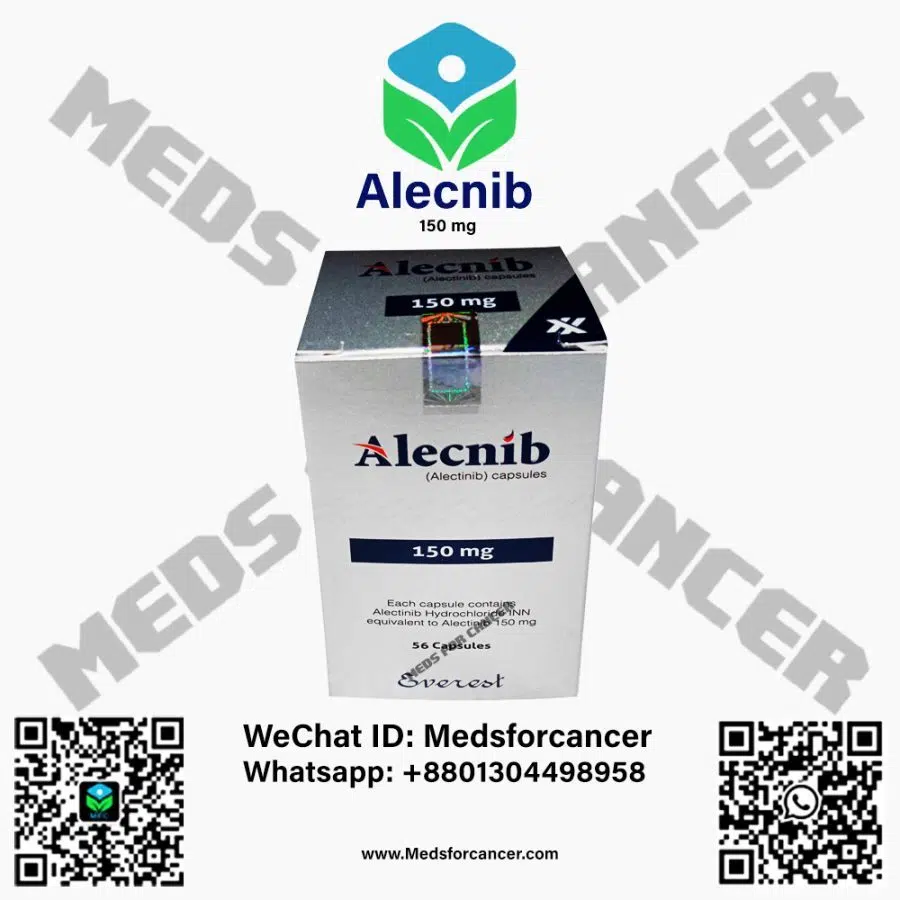
Alecnib 150 mg is a generic formulation of Alectinib — a second-generation Anaplastic Lymphoma Kinase (ALK) inhibitor — manufactured by Everest Pharmaceuticals Ltd. under WHO-GMP certified conditions in Bangladesh. Each capsule contains 150 mg of alectinib, the same active molecule found in Alecensa® (Roche/Chugai), and is dispensed under the Named Patient Program as a quality-assured, affordable alternative.
Unlike first-generation ALK inhibitors, alectinib is highly CNS-penetrant — a critical advantage, as ALK-positive NSCLC frequently metastasises to the brain.
| Generic name | Alectinib |
| Reference brand | Alecensa® (Roche / Chugai) |
| Manufacturer | Everest Pharmaceuticals Ltd. |
| Standard | WHO-GMP Certified |
| Drug class | ALK Inhibitor (2nd generation) |
| Dosage form | Hard capsule — 150 mg |
| Pack size | 56 capsules per pack |
| Route | Oral · twice daily with food |
| Prescription | Required — oncologist only |
How Alectinib Works
In ALK-positive NSCLC, a chromosomal rearrangement fuses the ALK gene (most commonly with EML4) to create a constitutively active fusion protein that drives uncontrolled tumour cell growth. Alectinib selectively and potently inhibits ALK and its resistance mutants, blocking this survival signal at the source.
What to Expect: First 30 Days
Alectinib is generally better tolerated than first-generation ALK inhibitors. Most patients experience milder side effects with a manageable early pattern.
- Week 1–2: Mild fatigue, constipation, or muscle aches are the most common early complaints. Photosensitivity can develop early — use broad-spectrum sunscreen and protective clothing outdoors from day one.
- Weeks 2–3: Your oncologist will arrange liver function and CPK blood tests. A mild bradycardia may be detected on ECG — usually asymptomatic but requires monitoring.
- Week 4: Many patients report stable or improving energy. Imaging typically shows early tumour response, including CNS lesion stabilisation, by the end of the first treatment cycle.
Side Effects
Alectinib is generally well-tolerated compared to chemotherapy and first-generation ALK inhibitors. Most side effects are manageable with dose adjustment or supportive care.
Common · Usually Manageable
- Fatigue and weakness
- Constipation
- Muscle pain (myalgia) and joint pain
- Photosensitivity — avoid direct sun
- Peripheral oedema (swollen ankles)
- Mild nausea or stomach discomfort
- Rash or dry skin
Serious · Report Immediately
- Hepatotoxicity (elevated liver enzymes)
- Interstitial lung disease / pneumonitis
- Symptomatic bradycardia
- Severe muscle damage (CPK elevation)
- Haemolytic anaemia
- New or worsening breathlessness, dry cough, or fever (possible pneumonitis)
- Yellowing of skin or eyes, dark urine, or right-sided abdominal pain (hepatotoxicity)
- Feeling faint, dizziness, or very slow heartbeat (symptomatic bradycardia)
How to Take Alecnib 150 mg
Standard dose: 4 capsules (600 mg) twice daily with food. Take approximately 12 hours apart for consistent drug levels.
- 1Twice daily with food — take approximately 12 hours apart (e.g. with breakfast and dinner).
- 2Swallow capsules whole with a full glass of water. Do not open, crush, or dissolve them.
- 3Sun protection is essential — apply broad-spectrum SPF 50+ sunscreen and wear protective clothing whenever outdoors.
- 4Never stop without your oncologist’s instruction — abrupt discontinuation risks rapid disease progression.
- 5Storage: below 30°C, protected from light and moisture, out of reach of children.
Caregiver Guidance
- ♥Monitor heart rate daily — alectinib can cause bradycardia. If the patient reports dizziness, lightheadedness, or fainting, contact the oncologist immediately.
- ♥Sun protection every day — ensure sunscreen is applied before any outdoor activity, even on cloudy days.
- ♥Watch for breathing changes — new breathlessness, persistent dry cough, or fever can signal pneumonitis. Report any respiratory change immediately.
If the Medicine Stops Working
Frequently Asked Questions
Do I need a biomarker test before starting Alecnib?
Can Alecnib treat brain metastases?
How is Alecnib different from Alecensa®?
Why must I take Alecnib with food?
How long will I be on Alecnib?
What if I miss a dose?
Meds For Cancer operates as a Named Patient Program (NPP) facilitator. Under this framework, WHO-GMP certified medicines are made available to individual patients with a confirmed medical need and a valid oncologist prescription, in countries where the branded product is unavailable or unaffordable.
This service does not constitute retail pharmacy dispensing. A prescription review is mandatory before any order is processed.
- Peters S, et al. Alectinib versus crizotinib in untreated ALK-positive NSCLC (ALEX). NEJM 2017;377:829–838.
- Nokihara H, et al. Alectinib versus crizotinib in ALK-inhibitor-naïve ALK-positive NSCLC (J-ALEX). Lancet Oncol 2017;18:765–775.
- NCCN Clinical Practice Guidelines in Oncology: NSCLC. V5.2026.
- Gainor JF, et al. Molecular mechanisms of resistance to first- and second-generation ALK inhibitors. Cancer Discov 2016;6:1118–1133.